Water, water every where, nor any drop to drink…

is

The Ancient Mariner and his men suffered horrific thirst because their ship becalmed at sea; he wouldn’t recognize the water problem we have today.

Scientists monitor the state of the planet: there is the Living Planet Index, which looks at the trends of vertebrate species, the Ecological Footprint that studies the demand on the world’s total resources, and the Water Footprint examines the global water supply.

In some ways, this last might well be considered the most important because without it life would simply cease to exist. It’s often hard to imagine, especially in the United States, the full extent of the problem given the fact we simply turn a faucet and there it is. Populations in the southwest and California are seeing the issue more up close and personally over the worst drought in a millennia. Our thinking is led astray by the fact that 70% of the planet is covered by water (326 million trillion gallons of it). However, when you scale down how much of that is usable and combine it with the Ecological footprint, the situation is alarming. In rough numbers, 2.5% of the total amount of water is fresh-water. Of that, two-thirds remains locked away in glaciers and ice caps. More of it is stored in the atmosphere, the soil, and in aquifers. Rivers, lakes, and swamps account for a mere .008% to sustain the world. Industrialized countries utilize technology to augment those needs by harvesting from deep-water acquifers, but the rate of depletion, here and across the globe, now outstrips the water cycle that returns usable water to the system.

North America is the largest exporter of cereal grains worldwide, and these crops are heavily dependent on water sources. As we deplete those sources to serve the worlds growing populations, especially China, India, and Nigeria, we will ultimately fall prey to the problem brought out by the Ecological footprint. Little did I wonder in 1970, as I struggled through my first semesters in high school, that it was the year the global population reached a level of parity with the planet’s ability to sustain it. Today, with seven billion people, the estimate is that it would take 1.5 planet Earths to sustain life. By 2050 the world’s population might reach, or even exceed, ten billion. The Living Planet Index has shown us that in the same forty-five year period, there has been a 52% decline in natural wildlife through hunting, habitat loss and degradation, and climate change; this brought about by irresponsible birth rates.

Of our current population, there are 769 million people without ready access to clean water. Three billion people, who live near one of the world’s 200 river basins, experience water scarcity at least part of the year.

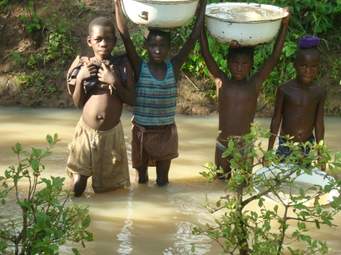
There are organizations in our own country who seek to provide stop-gap measures in underdeveloped countries where women and children (“a child dies on average every 20 seconds from water-related disease”) must spend a significant part of each day hauling water for their families and villages – that’s forty-four pounds for a five-pound jug of water lugged over an average of 3.75 miles per day.
is (1)

Water.org, a non-profit organization formed in 2009, from an alliance between WaterPartners International and H2O Africa, led by actor Matt Damon and Gary White, seeks to leverage commercial and social capital sources to make loans for drilling wells through their Water Credit program or by direct investment in areas for the “poorest of the poor”. To date, they have made over half a million loans with a 97% repayment rate in nine countries.

In 2008, a small group of college students led by then 19 year old Seth Maxwell, gave birth to an organization, the Thirst Project, that has served nearly 300,000 people in thirteen countries by drilling wells (40-year life span) or providing bio-sand filters (10-year life span) that remove pathogens and solids from water. To date, they have completed over 900 projects. The unique part of their program is that most of the fundraising effort involves over three hundred thousand high school and college students across the country. Their efforts have attracted such people as actor Pauley Perrette; Michelle O’Droske of Primerica; Tina Silvestri, the former vice president of operations for NBC owned TV stations; and Robbie Brenner, a film producer and president of production for Relativity Media to its Board of Directors. [Disclosure: my ex-wife and son are very committed and involved in this effort.]

To visit either of their websites (click on their hyperlinks) will yield an enormous enlightenment on the world’s water problems and each deserves consideration for support.

My only suggestion to the Thirst Project is a review of its catchy slogan: Water is a Human Right. While it’s true that many have circled the wagons around their essential cause, it also misdirects the fact that water use isn’t just about human consumption. One might even argue that access isn’t really a right at all, but simply a life necessity for all living things – it’s a shared planetary resource. That minute amount of fresh water must go to irrigation, livestock, domestic use, industrial use, the rapidly diminishing numbers of wildlife, forests, rainforests, and aquaculture. In this country, we take so much for granted. I personally measured one day’s water usage (not including running either the dishwasher or the washing machine) – it totaled 89 gallons: shower – 75, brushing teeth – 3, three toilet flushes – 9, drinking – 1, and my two dogs – 1.

We all need to adopt more responsible thinking about our resources in general, but most especially, water. If we don’t, we might all find ourselves lamenting the catchphrase of Samuel Taylor Coleridge’s epic poem and the title of this post.

The Death Penalty: A Personal Exposure

0e341bb860712cae6a59d33293f6ae76

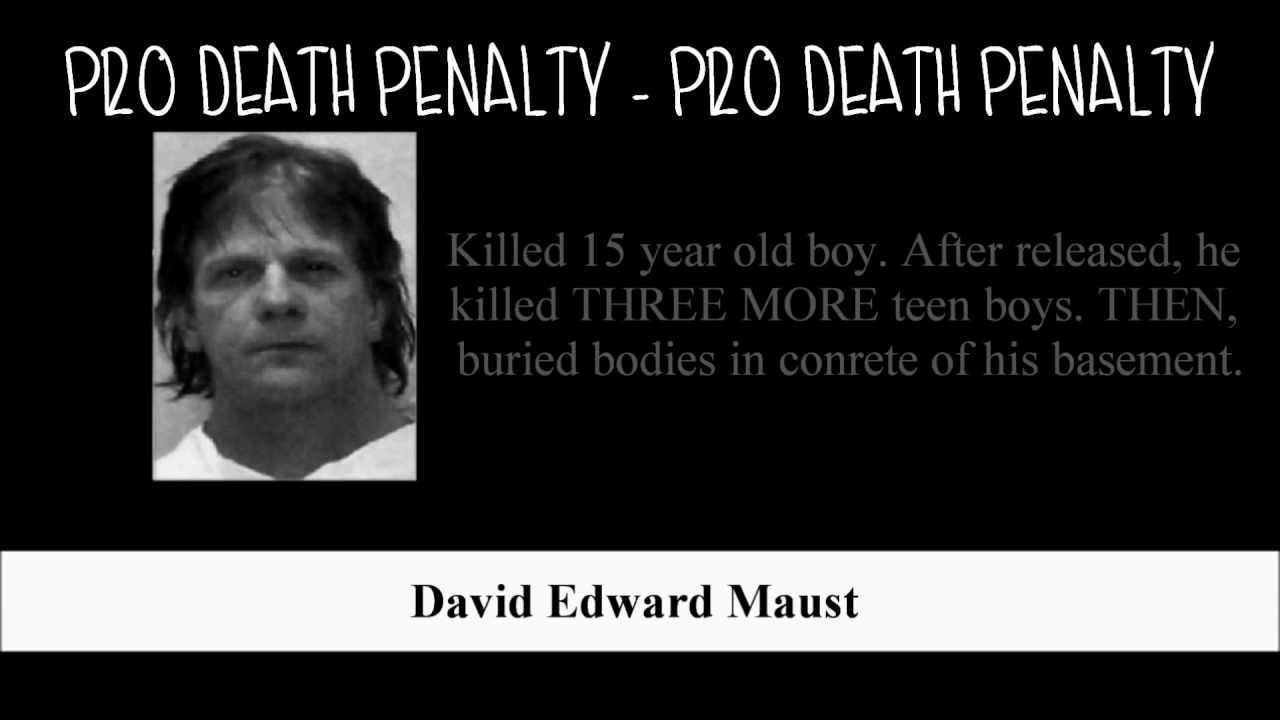
On June 29th, the U.S. Supreme Court issued a narrow ruling in favor of Oklahoma continuing its use of lethal injection in carrying out the death penalty. Discussion of capital punishment is cyclic; it’s a perennial topic all contenders for political office have to face – and answer to – in their bid for voters. Presidential elections are still sixteen months off, but controversy over the death penalty has a head start.

Justice Stephen Breyer wrote an impassioned dissent suggesting that since the last fundamental discussion on the constitutionality of the death penalty was nearly forty years ago; it is time to renew the debate. Breyer listed four points regarding the administration of the death penalty:

1 – Serious Unreliability

Clearly, this is the most frightful consideration in the application of the death penalty. There is no pardon from death. The fact 140 convicted people, later found to be innocent and released from death row, were innocent is more than enough consideration to be wary of prescribing the sentence. It begs the question as to how many people have actually forfeited their life because of a flawed criminal justice system. However, there is a simple fix to this problem. Alter the rules of conviction in capital cases to those proven beyond ALL doubt and not beyond all REASONABLE doubt. When someone’s life depends on the strengths and weaknesses of a prosecutor, a defense attorney, and the questionable intelligence of jury, the standards must exist at much higher level. That said, the likelihood of changing a legal system in place since medieval times seems a bit thin.

2 – Arbitrariness in application

Justice Breyer said: “the factors that most clearly ought to affect application of the death penalty – namely, comparative egregiousness of the crime – often do not. Other studies show that circumstances that ought not to affect application of the death penalty, such as race, gender, or geography, often do.” Can anyone really question the validity of such a statement? The numbers of examples one can site for the inequality of justice are legion.

3 – Unconscionably long delays

If the notion of unreliability is the most serious, this situation is the most ridiculous. According to the Death Penalty Center, as of 2012, the average wait time between conviction and carrying out the sentence is more than 15 years. It adds a complication to the discussion of cruel and unusual punishment, not to mention the increased societal cost. It seems ironic even to consider such a factor as cruel and unusual punishment in relation to someone whose crime was murder, or even the method of its administration as discussed in Glossip v. Gross. Whatever pains the convicted feels while in the throes of death seems irrelevant when compared to the life-long pain the victim’s family will have to endure the rest of their lives. It’s difficult to summon an ounce of sympathy in this regard.

4 – Most states have abandoned its use.

This is a mistake. Perhaps the more socially responsible approach is to apply the sentence in the cases beyond all doubt and move on.

Amnesty International touts the most often heard statement about capital punishment: it does not serve as a deterrent. They quote FBI data, which indicates 14 states without the penalty have homicide rates less than the national average. The statement sounds a bit self-serving. The most significant reason the punishment no longer works here is due to its removal from the public forum. In the years before 9/11 and radical jihadists, I never felt safer than walking the streets of Saudi Arabia – day or night. I have a long list of things I do not like about that country, but their murder rate stands at a mere .8 per 100,000. By comparison, America’s is at 4.7. Why? In Saudi Arabia, capital punishment is a public affair and in full display; it’s gruesome in its spectacle. To watch a few thousand Muslims emerge from a mosque on a Friday at noon and circle around the kill-zone, pushing and shoving to get up front in order to watch the executioner slice the back of a man’s neck open with a sword, is horrifically mesmerizing, which is the point. Human rights activists’ fault Saudi Arabia for its growing number of public executions and for good reason – capital punishment serves a broader spectrum of crime there. Nevertheless, there is no arguing the fact it is a significant deterrent to committing capital crimes. We are coming up on the 79th anniversary of the last public execution in this country. Perhaps when the Supreme Court reconvenes on the first Monday in October, they might consider an amendment to common law and push the notion of public display of execution back into vogue. It’s incongruent Americans can withstand the barbarism of white supremacy or gang wars, yet turn suddenly squeamish over a public display of execution designed to curb the very crimes which diminish the quality of our lives.

1982: My introduction to the effectiveness of the death penalty

A House Divided…

hqdefault

In June of 1858, Abraham Lincoln won the candidacy for the Republican Party in the Presidential race. He addressed over a thousand people that evening with a now famous speech that, in part, spoke of the rift caused by slavery. He quoted the bible: “A house divided against itself cannot stand.”

A hundred-fifty years have passed since Appomattox, and we seem to have come full circle. South Carolina is once again the center of controversy (the recent shootings in Charleston were, figuratively, a stone’s throw from Fort Sumter), and the ignominious face of racism has been unmasked, once more. We’re still dealing with the shame and arrogance of the Confederate flag, economic and political issues divide the nation, and terrorism runs rampant throughout the country as it did in the decades leading up to the Civil War. In the 1830s, there were upwards of 115 riots in the then major urban centers, and reports of lynchings were commonplace.

How sad is it to discover that we have learned nothing? For all our advances in medicine, technology, and science, we are still standing on the same foundation of the house that burned to the ground in the most catastrophic domestic war in our history. The Ku Klux Klan, formed in the aftermath of that war, during the so-called Reconstruction, still wreaks havoc. Its influence has spawned more than a dozen other white supremacist organizations, which are just as guilty of radicalizing our young minds as ISIS is.

Historically, I’m amazed that other, stronger nations of the period, like France or England, didn’t capitalize on our weaknesses then and attempt to absorb our nation into their empires. We may not be so fortunate the next time around. China and Russia are both posturing with imperialistic intent, both militarily and economically, and we are insolent enough to assume that we can withstand all-comers.

To borrow a quote from economist, John Maynard Keynes: “The difficulty lies not so much in developing new ideas as in escaping from old ones.” So how do you eradicate the truly pervasive and deep-rooted notions of racism and prejudice? You can’t undo the teaching of hate, you can’t legislate against it, civil wars don’t eradicate it – in fact, it probably exacerbates it, and you can’t go around shooting people who stand at the root of it all, though the temptation to do so might be appealing. Unfortunately, that would put all of us in the same category as Dylann Roof. Don’t laugh, Charles Cotton, moron extraordinaire and board member of the NRA said that if more people carried guns, nine people might not have died in Bible study class. I kid you not!

Racism is but one of many divides in our country. Politics, always a detestable and unpalatable subject, has practically unraveled to the point of political civil war, and any unifying force seems as remote as the Andromeda galaxy. If a Democrat says the sky is blue, the Republicans will pronounce it will ruin the economy. Economics: Republicans, Super PACs, and the 1% on the right; Democrats, the dwindling middle class, immigrants, and the common American on the left. How are you going to solve that one? I don’t even want to think about the Tea Party. Gays vs anti-gays, blacks and Jews vs white supremacists, Bible-thumping creationists vs the scientists, war-mongers vs the isolationists, union vs non-union, humanitarian aid vs ‘it’s not my problem’ types, or pick any other one you want, the list is inexhaustible.

Is leadership the answer? Right now, there appears to be only two voices out there that seem to make any sense: The Pope and Bernie Sanders. Since the former isn’t eligible for the presidency on any level, this leaves Mr. Sanders – who could possibly take the Republican Party seriously at this point. It’s a long road to next November. I’m not sure if leadership will help since whoever is elected will be hated by virtually fifty percent of the people.

In a recent post on racism, I said the only solution to curbing that problem lies within each of us, individually and the choices we make. I lack the faith that this notion will work in practice for the legion of problems we face. Meanwhile, I hear the timbers around me starting to crack inside my divided house. Anyone out there know a good carpenter? I can imagine someone making the corollary that Jesus was a carpenter. Well, if the guy was as good as so many people believe he was, then this might be a good time for him to make a pit-stop.

Diversity is the cultural norm of the United States, and the Constitution guarantees freedom of speech and religion, but there is a price. Diversity is the root of all conflict. It sparks the fuse of superiority and entitlement and explodes in a miasma of hate.