The Bible – A Moral Standard for Today?

(A video version of this post can be found at: https://www.instagram.com/p/DcQ9HdvOLrS/?hl=en)
The Bible, a term derived from the Greek ta biblia meaning “the books”, is often claimed as the world’s all-time bestseller. It’s become noun for any reference material that supports Christian ideals. The Old Testament portion is generally a collection of four genres: law or the Pentateuch, history, wisdom, and the prophets – both major and minor. Did Moses write the Pentateuch? Doubtful. The Documentary Hypothesis suggests the Pentateuch is actually a blending of four different sources of material written over a five hundred year period starting about a thousand years before Christ. Many of the other books are attributed to the Minor Prophets who claimed either inspiration from God or hearing his words directly. Today, if an author claimed to have written something as dictated directly from God, he’d be branded a lunatic, so I’m curious how the Bible gets a free pass. The bible we reference today has chapters and verses (that which foments the ease of quotability of passages), but they are only editorial additions that date back to the 13th and 16th centuries. To fully understand the evolution of the Bible we have today from the early collections of the Tanakh (to the Septuagint to the Torah, one would need to combine the talents of a scholar, a detective, and a puzzlist.

But the issue which concerns me is the staunch reliance on using it as the standard by which we measure our moral code. Certainly, the world has no lack of poor moralistic behavior, but to be guided by a series of texts that were drafted by unknown authors from thousands of years ago doesn’t strongly support much credibility especially if we acknowledge how heavily male-centric the documents are. More to the point, the moral fabric of our society is more complicated and diverse thant it was in past millennia, and it fluctuates. For example: there has always been homosexuality, at various points in history it was more acceptable than at other times, but it’s been around. Several hundred years ago it was acceptable for an older man to marry a girl just past puberty as she was now physically able to provide heirs. Today, that same man would be recognized as a pedophile. People surely had issues with gender identification, but probably just had to live with it. Psychology dates to the ancient Greeks and Egyptians, but it didn’t become a science until the 19th century. Our greater understanding of human complexity because of it alone should antiquate the Bible as a governing source of moral standards.

Still, the most egregious use of the Bible is the cherry-picking of quotes as a basis for taking the upper hand in an argument. You know what I mean – all those people who open a sentence by saying: the Bible says…or according to the Bible…I love the scene from season 2, episode 3 of The West Wing in which President Bartlet demonstrates how ridiculous it is to cherry-pick by displaying the inconsistencies of the Old Testament that systematically condemns our modern way of life. Check it out on Netflix.

Then we have the New Testament, the Gospels attributed (doubtfully) to the words of the apostles and the letters (epistles) from Paul, James, Peter, and John. These are given nearly divine significance because of their personal association with Jesus, well, except Paul, he never met him. If anything from the bible should be used as the foundation for moralistic behavior, it might be the teachings credited to Jesus, or more appropriately Yeshua; at least he taught acceptance and love toward ALL. In fact, if you even ignore the belief that Jesus was incarnate from God and just listen to what he had to say, the teachings offer an amazing amount of guidance. All the Christian mutterings in the news today seem to fly in the face of everything Jesus stood for just as Republican policies regarding immigration, DEI, ICE operations, and being anti-WOKE do. Most Christians wouldn’t relate to what Jesus stood for if they were slapped in the head with a copy of the Beatitudes.

As for the bible itself, as far as I’m concerned you can toss it in the garbage along with the Torah and the Koran.

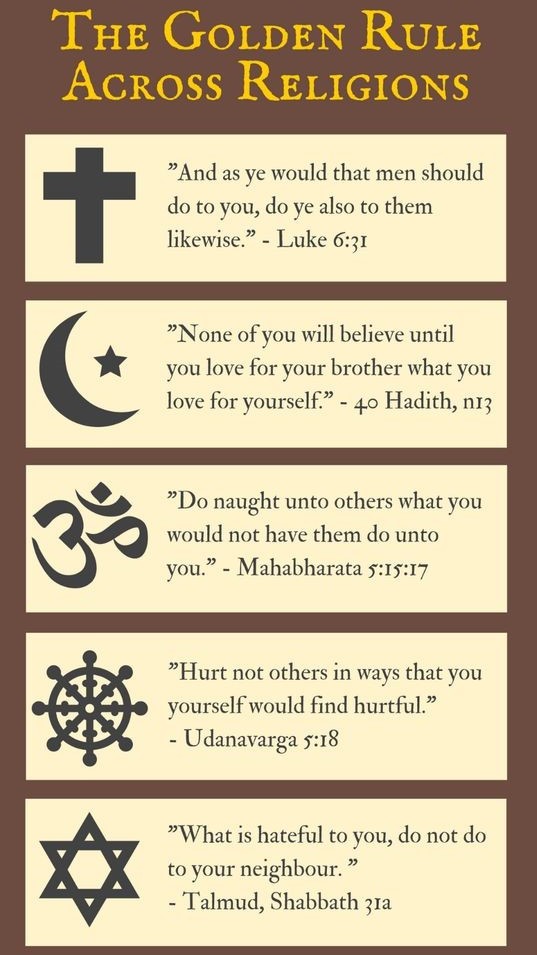
Simply replace it all with the Golden Rule – that covers a lot of ground all by itself because it transcends all religions, civilizations, and societies.
From Yeshua – Peace I leave with you, my peace I give you… John 14:27

Give me a follow by clicking the blue button at the top right under the banner…

Atheism – A Religious Irony

(A video version of this post can be found at: https://www.instagram.com/p/DcEktecpZsp/)

Growing up, social etiquette dictated a rule – never speak of religion or politics in social settings. Up to about ten years ago, I was a good boy, but after turning 60, I discovered I didn’t really much care if people liked what I decided to write or post about.

Yes, as a storyteller, my hope is that the books I write offer a few hours of escape and enjoyment just as I was the thankful recipient of the stories from my favorite authors.

But one thing that was drilled into my head while studying for my Master of Fine Arts Degree was that writers observe and then package what we observe into our writing. We become the spokesmen for the human condition. It’s why books like 1984, Fahrenheit 451, Of Mice and Men, and The Brothers Karamazov are such amazing classics.

Given the times in which we live, I, like many of my fellow writers, feel compelled to weigh in on the taboo topics of religion and politics. I posted a politically themed reel the other day, and as I suspected would happen, robust commentary from the questionably intelligent thoughts of some MAGA patriots began to flow.

See what I mean?

But religion is another focus of mine. Why? Because it was a central part of the first half of my life.

When I was eight years old, my parents informed me that my father was taking steps to answer his “calling” to enter the priesthood. Sure enough, he disappeared from my life for several years as he worked by day and went to Mercer School of Theology at night with the goal of being ordained in the Episcopal Church (that’s catholic-lite to the R.C.s amongst you or catholic with less guilt). Three years later, I rose from my bed with the flu to witness our bishops administer the laying on of hands at the Cathedral of the Incarnation in Garden City, NY (yes, Episcopalians do retain the ‘authority’ of Apostolic Succession). From that day forward I became a PK. Shortly thereafter, we moved into a rectory and began a life that was heavily infused with religion – it was our daily existence.

And I did my part. I trained the acolytes, became a Sunday school teacher, joined the vestry when I was eighteen, and passed the requirements to become licensed as a Lay Reader and a Chalice Administrator. On rare occasions, when my father was sick, I even led the congregation in Morning Prayer. This continued well into my adult years.

One day, while showering, I had an epiphany (not to be confused with the Christian celebration) and answered a nagging question: why did I have so much trouble holding my faith? Answer: I never had it in the first place. It was stunning in its simplicity. Something clicked into place at that moment. I realized that most of the teachings of the church didn’t make sense, never did, but I was now free to explore alternatives, and not to stubbornly try for the forced acknowledgment of a faith I didn’t have. I embraced agnosticism for about a month. The exploration ultimately led to atheism.

Now, here’s the irony. Forty years of religious life, going to church weekly, if not semi-weekly, reciting and memorizing countless prayers and creeds, none of that ever came close to the profound realization I gained from becoming an atheist. Atheism is what provided me with an enhanced sense of morality.

Imagine, just for a moment that there is no God, that there is no life after death, that your time on earth is truly the only shot you have at living – just picture this for a second. Now imagine how much more the value of a life increases. How much more heinous is a murder, or a war, or neglect of our fellow man given that this is all we will ever have? It increases the magnitude of those transgressions beyond understanding. You would no longer be able to suffer life with the thought that – it’s alright, your reward will come after you die. You can no longer take solace in the concept that evildoers will suffer an indescribable fate when the Day of Judgment comes. It knocks the system of justice off its well-oiled tracks and trashes thousands of years of assumption. When you free yourself from the constraints that teach against the idea that it’s possible to have evolved into sentient creatures without benefit of divine influence, it liberates your thought process to imagine so many other insightful and meaningful truths.

Atheism taught me this. Atheism, not religion, taught me to honor the life of every deserving human being. It taught me restraint. It created in me a painful sensitivity to injustice – something which hurts more every day as I look at the news both here and abroad – from people being murdered by ICE to the arbitrary hanging of protesters in Iran, from the renditions of harmless immigrants to living in a society which creates more and more opportunity for the wealthy to obtain an obscene amount of riches.

Take a good hard look at our world – it’s insane and it’s getting worse. A fair share has to do with religion, that little thing which has been the root cause of more death, destruction, and misery over these many millennia. Religion, nationalism, and inequality are the dynamic forces driving humanity to the brink. Add to that a thriving cancel culture, unparalleled greed, and the narcissistic personalities of those in leadership positions and it’s a wonder if it is even possible to steer a course that might avoid an ultimate dystopia.

Just think about it…

Give me a follow by clicking the blue button at the top right under the banner…

The Bible: The Moral Standard?

e8155fe26a17f097ec42cb59991a9953

The Bible, many claim it’s the bestselling book (it’s more of a collection of books, of which there are many different compilations) of all time. The name itself is used as a noun for any reference material that purports to be the standard for its subject. Is the Old Testament an historical collation? People certainly seem to use it in search of archaeological sites and to establish a corroborating reference for the development of ancient civilizations. Did Moses write the Pentateuch? Doubtful, unless he reincarnated five hundred to a thousand years after his death to pen his own memoir and to memorialize the world’s creation. The Documentary Hypothesis suggests that the Pentateuch is actually a blending from four different sources of material written over a five hundred year period starting about a thousand years before Christ. Many of the other books are attributed to the Minor Prophets who claimed either inspiration from God or hearing his words directly. Today, if we knew an author who claims to have written something that was told to him directly by God, he’d be branded a lunatic, so I’m curious how it is that the Bible gets a free pass?

The modern Bible has chapters and verses (something which adds to the quotability of passages), but they are only editorial additions that date back to the 13th and 16th centuries. The presentation of the Holy Scriptures is broken into subsets: law, history, wisdom, and the writings of the prophets.

But the issue which concerns me is the staunch reliance on the part of the religious community in using it as the standard by which we measure our moral code of today. Certainly, the world in general is experiencing a rapid decline in moralistic behavior, but to be guided by a series of texts that were drafted by some unknown authors three thousand years ago, is a bit too far of a stretch for credibility. More to the point, the moral fabric of our society is more complicated and diverse that it was in past millennia, and it fluctuates. There has always been homosexuality, at times it has been more accepted than others, but it’s been around. Several hundred years ago it was acceptable for an older man to marry a girl just past puberty as she was now physically able to provide heirs  – also, let’s face it, he probably had the hots for a younger girl. In 2015, that same man would be recognized as a pedophile. People surely had issues with inner feelings through the ages that would ultimately become known as transgender identification, but that’s more of a recent admission. Psychology dates back to the ancient Greeks and Egyptians, but it didn’t become a science until the 19th century. Our greater understanding of human complexity because of it alone should antiquate the Bible as a governing source of moral reference.

The most egregious use of the Bible is the cherry-picking of quotes as a basis for an argument. I love this scene from the TV series The West Wing:

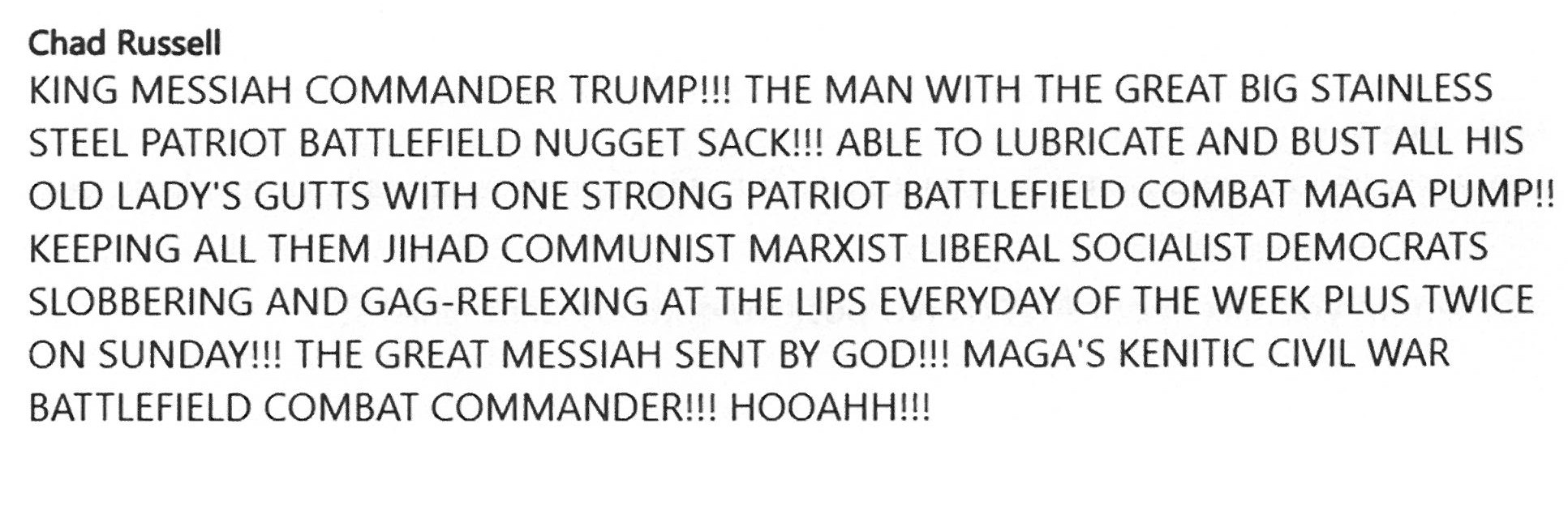
I have recently written about the LGBTQ issue of Transgenderism; this is some of what I got in response:

“No amount of glaze can hide the warts on this unnatural aberration”.

She calls transgendered people an aberration. Unnatural? By very definition, if it stems from nature, as we are all creatures of nature, then inherently it cannot be unnatural. What is unnatural is something like Donald Trump leading the Republican polls.

“For this reason God gave them up to vile passions. For even their women exchanged the natural use for what is against nature. Likewise also the men, leaving the natural use of the woman, burned in their lust for one another, men with men committing what is shameful, and receiving in themselves the penalty of their error which was due.” Romans 1:26 — Romans 1:27.   

 I’m still trying to figure out what the penalty was that they took into themselves, but I’m guaranteed an enlightening response from someone even more studied in Bible scripture. I’m sure it has something to do with the unfortunate lack of condoms back then.

“Do you not know that the unrighteous will not inherit the kingdom of God? Do not be deceived. Neither fornicators, nor idolaters, nor adulterers, nor homosexuals, nor sodomites,nor thieves, nor covetous, nor drunkards, nor revilers, nor extortions will inherit the kingdom of God.

There you go, folks, we’re all going to hell. I guess as an atheist, I’m spared that fate since I don’t believe in hell, but I digress.

Here’s another:

“You can’t put yourself in front of another person and just say I’m this or that and not expect repercussions. I have a deep sympathy for inner city kids who don’t stand a chance in life of digging out of the poverty and degradation their parents have bestowed upon them. But when I work with them I do it in a controlled environment, I don’t confront their parents or walk into their ghetto world as a white man. You can be whatever you want to be, but everyone will not accept that and you better have enough moxie to know the difference. I do not agree with the LGBT agenda, but I do not ostracize anyone based on that and love and respect people by who they are not what they are. My point is this: if you want to be gay or whatever, that’s your business, but you cannot expect the rest of the world to accept your ideology.”

So does that mean that I can’t introduce myself as a writer in fear that someone who hates writers will not accept me? Will the repercussion be that I’m shot because of it? And tell me, why can’t the rest of the world accept other people’s ideologies, if those beliefs are in no way harmful to the way you wish to live your life?

Then there is the New Testament, the Gospels attributed (doubtfully) to the words of the apostles, the letters from Paul (which includes the words directed at me by my detractor from above), and from James, Peter, and John. These are given divine significance because of their personal association with Jesus Christ as the Son of God (except Paul, he never met the guy). If anything from the bible should be used as the foundation for moralistic behavior, it might be the teachings credited to Christ; at least he taught acceptance and love toward ALL. In fact, if you dispense with the idea that Jesus was incarnate from God and listen to what he had to say, it makes more sense as a teaching than as a crutch we have to lean on in order to behave well.

It has gotten to the point that the moment I hear someone quoting the Bible, my ears close off because whatever argument is being waged is being launched from a faulty platform. There is one axiom that transcends all religions and all civilizations: The Golden Rule. Do unto others as you would have done to yourself. Let’s go with that one, and forget the rest.

Something to consider for your reading enjoyment:

What we should be allowed to do if we adhere to the Bible

What we should be allowed to do if we adhere to the Bible