The Flying Fickle Finger of Fate Award: The Polar Divide

flying-fickle-finger-of-fate

In the late 60s and early 70s, an enormously popular TV comedy show, Rowan & Martin’s Laugh-in, routinely awarded the Flying Fickle Finger of Fate trophy for such things as Congress being unable to pass gun control legislation (click on the link – 47 years ago and we’re still talking), or for cops who sleep on the job, or once for the state of California for passing a law that allowed car dealers to disconnect odometers until the vehicle was sold. Though delivered within the context of a variety comedy show, most recipients were chosen for a more derisive purpose.

So, the Polar Divide. I say polar as in opposite as well as something glacial (big and cold) in nature. It’s what we’ve got. Here’s a short list:

Republican vs Democrat: budget and debt, education, the environment, immigration, and tax reform go through endless yet inconclusive debate.

Congressional Voting

Congressional Voting

Gay Marriage vs Heterosexual Marriage: though the LGBTQ community has finally received legislative support, the debate and posturing continues ad nauseum.

marriage merge

Ban the Confederate Flag vs proudly flying its colors: racist or heritage – an amazing example of how people can be insensitive and egocentric

flag

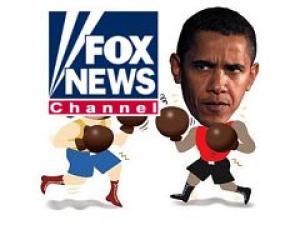
For those for Obama vs those Against Obama: more like Democrats vs Fox News

Obama Fox 119-300x225

White Supremacists vs Jews and anyone not white: the ugliest face of America

white pride

1% vs 99% (Government, Wall Street, and the wealthiest Americans): the definition of unbalanced.

99vs1

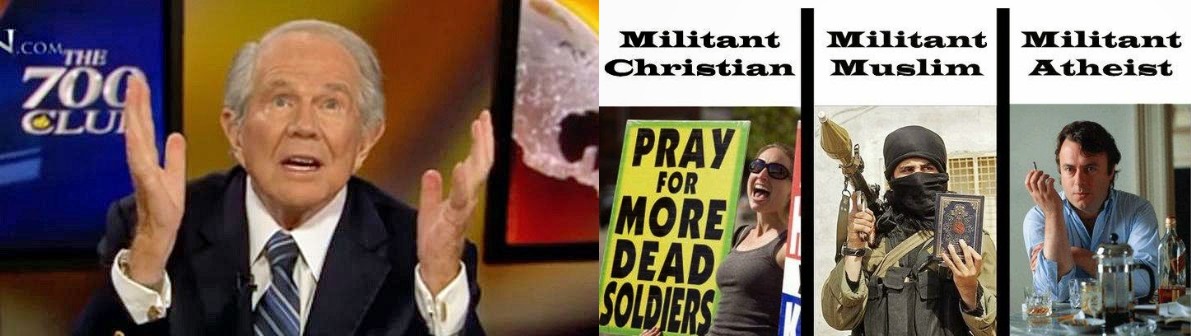
Freedom From Religion vs Religion (State vs Church): Bible thumpers, atheists, governments, all circling around the mat, pulling quotes out of context, misconstruing the truth, and morons like Pat Robertson claiming we’re all going to be having sex with animals soon because of gay marriage (apply this comment to the marriage item above, as well).

freedom from religion 2

Police Brutality vs Black People: it’s hard to ignore the fact that more unarmed black people are shot by police than any other group, but people also forget that uniformed police officers are often moving targets – when your life is on the line daily, it’s hard to imagine that you don’t overreact sometimes. Unfortunately, an underlying sense of racism fuels the fire, and it’s not going to get better any time soon.

police brutality

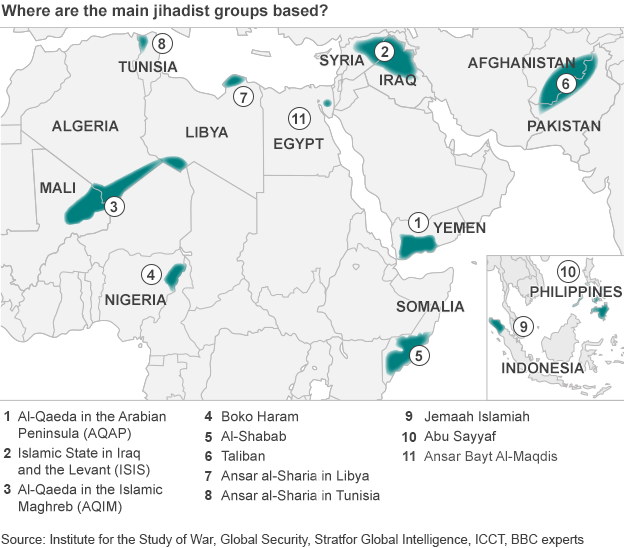
American Jihadists against anyone and everyone. As I said in a post a couple of months ago, the war is here, and it too won’t be getting better any time soon.

_75669146_jihadist_groups_world_map_624_v5

I’m sure if I thought for another three or four seconds I could augment this list with another dozen examples. Such a huge percent of the news I read and the meme’s I see (I also create memes in the way cartoons try to illustrate the ridiculous, but I do attempt to be truthful) are so heavily laden with finger pointing that things have escalated to the point where truth has been left behind; in fact it’s unrecognizable. Our political candidates are, and always have been, the worst of the lot. They just don’t get that we don’t want to hear what the other guy did wrong; we want to hear what they’re going to do, instead.

Wars often bring a people together (Vietnam notwithstanding), but I don’t see how in the face of these polar divisions we will ever be able to conquer our domestic foes (hell, our own Civil War only had like four major fundamental factors), not to mention those that are ramping up their military overseas: Russia, China, North Korea, and the indecipherable mess that is always the Middle East – loyalties, hatreds, vendetta’s, alliances; they shift faster than the sands of their dunes.

So, on this fine morning, I hereby present the Flying Fickle Finger of Fate award to the Government of the United States and its people for being so addle-brained, capricious, and ignorant that the nation now has a seemingly unsolvable divide and for setting the nation rolling down the hill to oblivion with no emergency brake.

Certificate ver 2

Water, water every where, nor any drop to drink…

is

The Ancient Mariner and his men suffered horrific thirst because their ship becalmed at sea; he wouldn’t recognize the water problem we have today.

Scientists monitor the state of the planet: there is the Living Planet Index, which looks at the trends of vertebrate species, the Ecological Footprint that studies the demand on the world’s total resources, and the Water Footprint examines the global water supply.

In some ways, this last might well be considered the most important because without it life would simply cease to exist. It’s often hard to imagine, especially in the United States, the full extent of the problem given the fact we simply turn a faucet and there it is. Populations in the southwest and California are seeing the issue more up close and personally over the worst drought in a millennia. Our thinking is led astray by the fact that 70% of the planet is covered by water (326 million trillion gallons of it). However, when you scale down how much of that is usable and combine it with the Ecological footprint, the situation is alarming. In rough numbers, 2.5% of the total amount of water is fresh-water. Of that, two-thirds remains locked away in glaciers and ice caps. More of it is stored in the atmosphere, the soil, and in aquifers. Rivers, lakes, and swamps account for a mere .008% to sustain the world. Industrialized countries utilize technology to augment those needs by harvesting from deep-water acquifers, but the rate of depletion, here and across the globe, now outstrips the water cycle that returns usable water to the system.

North America is the largest exporter of cereal grains worldwide, and these crops are heavily dependent on water sources. As we deplete those sources to serve the worlds growing populations, especially China, India, and Nigeria, we will ultimately fall prey to the problem brought out by the Ecological footprint. Little did I wonder in 1970, as I struggled through my first semesters in high school, that it was the year the global population reached a level of parity with the planet’s ability to sustain it. Today, with seven billion people, the estimate is that it would take 1.5 planet Earths to sustain life. By 2050 the world’s population might reach, or even exceed, ten billion. The Living Planet Index has shown us that in the same forty-five year period, there has been a 52% decline in natural wildlife through hunting, habitat loss and degradation, and climate change; this brought about by irresponsible birth rates.

Of our current population, there are 769 million people without ready access to clean water. Three billion people, who live near one of the world’s 200 river basins, experience water scarcity at least part of the year.

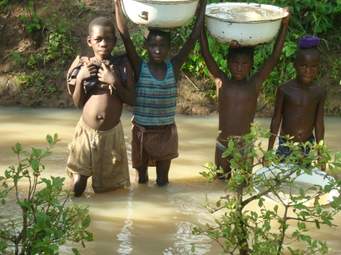
There are organizations in our own country who seek to provide stop-gap measures in underdeveloped countries where women and children (“a child dies on average every 20 seconds from water-related disease”) must spend a significant part of each day hauling water for their families and villages – that’s forty-four pounds for a five-pound jug of water lugged over an average of 3.75 miles per day.

is (1)

Water.org, a non-profit organization formed in 2009, from an alliance between WaterPartners International and H2O Africa, led by actor Matt Damon and Gary White, seeks to leverage commercial and social capital sources to make loans for drilling wells through their Water Credit program or by direct investment in areas for the “poorest of the poor”. To date, they have made over half a million loans with a 97% repayment rate in nine countries.

In 2008, a small group of college students led by then 19 year old Seth Maxwell, gave birth to an organization, the Thirst Project, that has served nearly 300,000 people in thirteen countries by drilling wells (40-year life span) or providing bio-sand filters (10-year life span) that remove pathogens and solids from water. To date, they have completed over 900 projects. The unique part of their program is that most of the fundraising effort involves over three hundred thousand high school and college students across the country. Their efforts have attracted such people as actor Pauley Perrette; Michelle O’Droske of Primerica; Tina Silvestri, the former vice president of operations for NBC owned TV stations; and Robbie Brenner, a film producer and president of production for Relativity Media to its Board of Directors. [Disclosure: my ex-wife and son are very committed and involved in this effort.]

To visit either of their websites (click on their hyperlinks) will yield an enormous enlightenment on the world’s water problems and each deserves consideration for support.

My only suggestion to the Thirst Project is a review of its catchy slogan: Water is a Human Right. While it’s true that many have circled the wagons around their essential cause, it also misdirects the fact that water use isn’t just about human consumption. One might even argue that access isn’t really a right at all, but simply a life necessity for all living things – it’s a shared planetary resource. That minute amount of fresh water must go to irrigation, livestock, domestic use, industrial use, the rapidly diminishing numbers of wildlife, forests, rainforests, and aquaculture. In this country, we take so much for granted. I personally measured one day’s water usage (not including running either the dishwasher or the washing machine) – it totaled 89 gallons: shower – 75, brushing teeth – 3, three toilet flushes – 9, drinking – 1, and my two dogs – 1.

We all need to adopt more responsible thinking about our resources in general, but most especially, water. If we don’t, we might all find ourselves lamenting the catchphrase of Samuel Taylor Coleridge’s epic poem and the title of this post.

The Death Penalty: A Personal Exposure

0e341bb860712cae6a59d33293f6ae76

On June 29th, the U.S. Supreme Court issued a narrow ruling in favor of Oklahoma continuing its use of lethal injection in carrying out the death penalty. Discussion of capital punishment is cyclic; it’s a perennial topic all contenders for political office have to face – and answer to – in their bid for voters. Presidential elections are still sixteen months off, but controversy over the death penalty has a head start.

Justice Stephen Breyer wrote an impassioned dissent suggesting that since the last fundamental discussion on the constitutionality of the death penalty was nearly forty years ago; it is time to renew the debate. Breyer listed four points regarding the administration of the death penalty:

1 – Serious Unreliability

Clearly, this is the most frightful consideration in the application of the death penalty. There is no pardon from death. The fact 140 convicted people, later found to be innocent and released from death row, were innocent is more than enough consideration to be wary of prescribing the sentence. It begs the question as to how many people have actually forfeited their life because of a flawed criminal justice system. However, there is a simple fix to this problem. Alter the rules of conviction in capital cases to those proven beyond ALL doubt and not beyond all REASONABLE doubt. When someone’s life depends on the strengths and weaknesses of a prosecutor, a defense attorney, and the questionable intelligence of jury, the standards must exist at much higher level. That said, the likelihood of changing a legal system in place since medieval times seems a bit thin.

2 – Arbitrariness in application

Justice Breyer said: “the factors that most clearly ought to affect application of the death penalty – namely, comparative egregiousness of the crime – often do not. Other studies show that circumstances that ought not to affect application of the death penalty, such as race, gender, or geography, often do.” Can anyone really question the validity of such a statement? The numbers of examples one can site for the inequality of justice are legion.

3 – Unconscionably long delays

If the notion of unreliability is the most serious, this situation is the most ridiculous. According to the Death Penalty Center, as of 2012, the average wait time between conviction and carrying out the sentence is more than 15 years. It adds a complication to the discussion of cruel and unusual punishment, not to mention the increased societal cost. It seems ironic even to consider such a factor as cruel and unusual punishment in relation to someone whose crime was murder, or even the method of its administration as discussed in Glossip v. Gross. Whatever pains the convicted feels while in the throes of death seems irrelevant when compared to the life-long pain the victim’s family will have to endure the rest of their lives. It’s difficult to summon an ounce of sympathy in this regard.

4 – Most states have abandoned its use.

This is a mistake. Perhaps the more socially responsible approach is to apply the sentence in the cases beyond all doubt and move on.

Amnesty International touts the most often heard statement about capital punishment: it does not serve as a deterrent. They quote FBI data, which indicates 14 states without the penalty have homicide rates less than the national average. The statement sounds a bit self-serving. The most significant reason the punishment no longer works here is due to its removal from the public forum. In the years before 9/11 and radical jihadists, I never felt safer than walking the streets of Saudi Arabia – day or night. I have a long list of things I do not like about that country, but their murder rate stands at a mere .8 per 100,000. By comparison, America’s is at 4.7. Why? In Saudi Arabia, capital punishment is a public affair and in full display; it’s gruesome in its spectacle. To watch a few thousand Muslims emerge from a mosque on a Friday at noon and circle around the kill-zone, pushing and shoving to get up front in order to watch the executioner slice the back of a man’s neck open with a sword, is horrifically mesmerizing, which is the point. Human rights activists’ fault Saudi Arabia for its growing number of public executions and for good reason – capital punishment serves a broader spectrum of crime there. Nevertheless, there is no arguing the fact it is a significant deterrent to committing capital crimes. We are coming up on the 79th anniversary of the last public execution in this country. Perhaps when the Supreme Court reconvenes on the first Monday in October, they might consider an amendment to common law and push the notion of public display of execution back into vogue. It’s incongruent Americans can withstand the barbarism of white supremacy or gang wars, yet turn suddenly squeamish over a public display of execution designed to curb the very crimes which diminish the quality of our lives.

1982: My introduction to the effectiveness of the death penalty