60 Years Old: Now what?

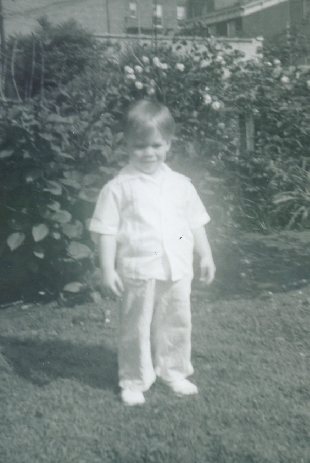
Once Upon A Time

Once Upon A Time

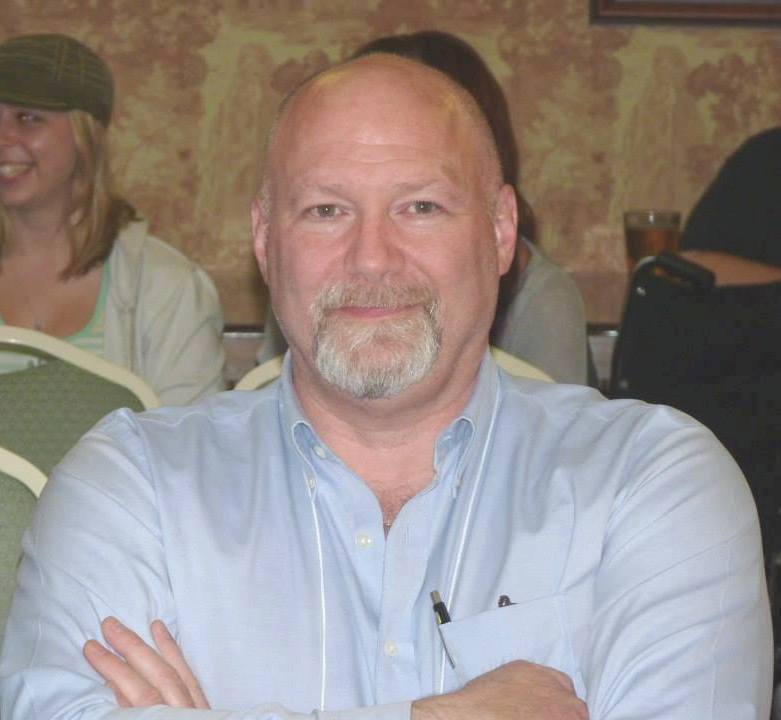
I lost my glow...

I lost my glow…

I’m going to assume I’ll make it to the age of 80 (relatives on my mother’s side have made that and beyond, so I’ll be either cautiously optimistic or conservative – depending on how you look at it).

Mathematically, I’m at the 75% mark – I am an accountant by profession, after all. You are given three choices of where to look: back, forward, or up. I’m too old to enter the space program or volunteer for the ‘one-way trip to colonize Mars’ thing, so that leaves back or forward.

Two things drag your attention backward – either you like to revisit fond memories or take stock of your regrets. The former is a pleasure; the latter provides incentive to limit creating any new ones.

My regrets:

  1. I never served in the Navy.
  2. I didn’t become a marine biologist.
  3. I did become an accountant.
  4. I never told my first true love that I loved her – which gave me insight for writing character. (See page 34 once my still unpublished novel Alfheim comes out)
  5. I waited forty years before getting an MFA and writing books – not necessarily in that order.
  6. I didn’t get into more trouble when I was younger.

So, six. That’s not too bad.

Memories:

I have lots and lots of good ones. Enough said.

Looking forward – you can wax philosophical, use metaphor, avoid thinking about death, or try to figure out how to extricate yourself from the mess you’ve made of your life.

My goals:

  1. Extricate myself from the mess I’ve made of my life.
  2. Save the world through my novels and what I write in my blog.
  3. Become the President of the United States because I assure you that no one else can do the job that I would do.
  4. See both my sons through college and into doing something they love.
  5. Living out my life with Nancy – a big part of accomplishing #1.
  6. Moving to California (see #5) – they go hand-in-hand.
  7. Marrying Jennifer Lawrence – that would only happen if #5 doesn’t work out and I can best quantum physics and somehow shed 35 years off my life – or if Nancy winds up marrying Sean Connery (It could happen). Actually if I could shed years, then I could revisit regrets #1,2,3,5, and 6. Hmm.
  8. Not be an accountant anymore so I can write full time.

I heard someone say recently that 60 is the new 40, but I figure that had to be some other baby-boomer like me. Who cares, I appreciated the sentiment anyway. To use a cliché: It is what it is. Take what you’ve got, put the crap behind you, put your best assets into play, and go for it. It’s the only way to get ahead and avoid more regrets. One last cliché for the road: you snooze, you lose. Enough said there, too.

The Death Penalty: A Personal Exposure

0e341bb860712cae6a59d33293f6ae76

On June 29th, the U.S. Supreme Court issued a narrow ruling in favor of Oklahoma continuing its use of lethal injection in carrying out the death penalty. Discussion of capital punishment is cyclic; it’s a perennial topic all contenders for political office have to face – and answer to – in their bid for voters. Presidential elections are still sixteen months off, but controversy over the death penalty has a head start.

Justice Stephen Breyer wrote an impassioned dissent suggesting that since the last fundamental discussion on the constitutionality of the death penalty was nearly forty years ago; it is time to renew the debate. Breyer listed four points regarding the administration of the death penalty:

1 – Serious Unreliability

Clearly, this is the most frightful consideration in the application of the death penalty. There is no pardon from death. The fact 140 convicted people, later found to be innocent and released from death row, were innocent is more than enough consideration to be wary of prescribing the sentence. It begs the question as to how many people have actually forfeited their life because of a flawed criminal justice system. However, there is a simple fix to this problem. Alter the rules of conviction in capital cases to those proven beyond ALL doubt and not beyond all REASONABLE doubt. When someone’s life depends on the strengths and weaknesses of a prosecutor, a defense attorney, and the questionable intelligence of jury, the standards must exist at much higher level. That said, the likelihood of changing a legal system in place since medieval times seems a bit thin.

2 – Arbitrariness in application

Justice Breyer said: “the factors that most clearly ought to affect application of the death penalty – namely, comparative egregiousness of the crime – often do not. Other studies show that circumstances that ought not to affect application of the death penalty, such as race, gender, or geography, often do.” Can anyone really question the validity of such a statement? The numbers of examples one can site for the inequality of justice are legion.

3 – Unconscionably long delays

If the notion of unreliability is the most serious, this situation is the most ridiculous. According to the Death Penalty Center, as of 2012, the average wait time between conviction and carrying out the sentence is more than 15 years. It adds a complication to the discussion of cruel and unusual punishment, not to mention the increased societal cost. It seems ironic even to consider such a factor as cruel and unusual punishment in relation to someone whose crime was murder, or even the method of its administration as discussed in Glossip v. Gross. Whatever pains the convicted feels while in the throes of death seems irrelevant when compared to the life-long pain the victim’s family will have to endure the rest of their lives. It’s difficult to summon an ounce of sympathy in this regard.

4 – Most states have abandoned its use.

This is a mistake. Perhaps the more socially responsible approach is to apply the sentence in the cases beyond all doubt and move on.

Amnesty International touts the most often heard statement about capital punishment: it does not serve as a deterrent. They quote FBI data, which indicates 14 states without the penalty have homicide rates less than the national average. The statement sounds a bit self-serving. The most significant reason the punishment no longer works here is due to its removal from the public forum. In the years before 9/11 and radical jihadists, I never felt safer than walking the streets of Saudi Arabia – day or night. I have a long list of things I do not like about that country, but their murder rate stands at a mere .8 per 100,000. By comparison, America’s is at 4.7. Why? In Saudi Arabia, capital punishment is a public affair and in full display; it’s gruesome in its spectacle. To watch a few thousand Muslims emerge from a mosque on a Friday at noon and circle around the kill-zone, pushing and shoving to get up front in order to watch the executioner slice the back of a man’s neck open with a sword, is horrifically mesmerizing, which is the point. Human rights activists’ fault Saudi Arabia for its growing number of public executions and for good reason – capital punishment serves a broader spectrum of crime there. Nevertheless, there is no arguing the fact it is a significant deterrent to committing capital crimes. We are coming up on the 79th anniversary of the last public execution in this country. Perhaps when the Supreme Court reconvenes on the first Monday in October, they might consider an amendment to common law and push the notion of public display of execution back into vogue. It’s incongruent Americans can withstand the barbarism of white supremacy or gang wars, yet turn suddenly squeamish over a public display of execution designed to curb the very crimes which diminish the quality of our lives.

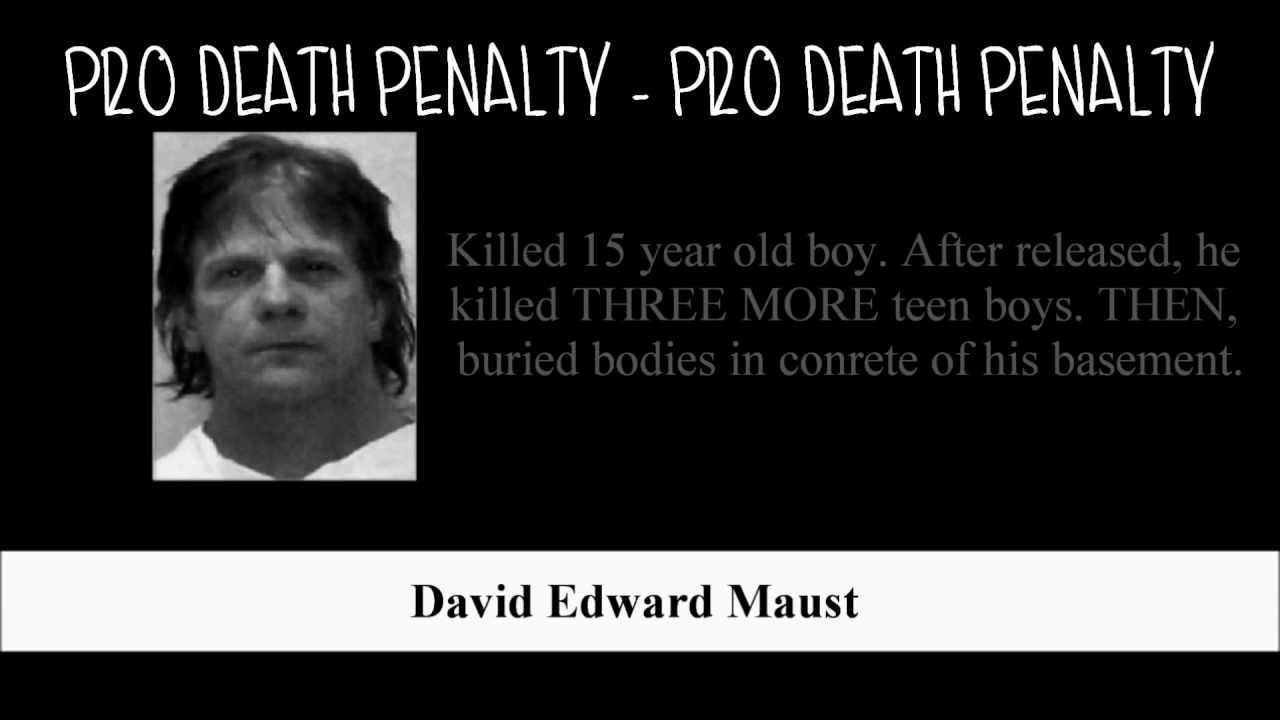
1982: My introduction to the effectiveness of the death penalty

When Does a Right become a Right?

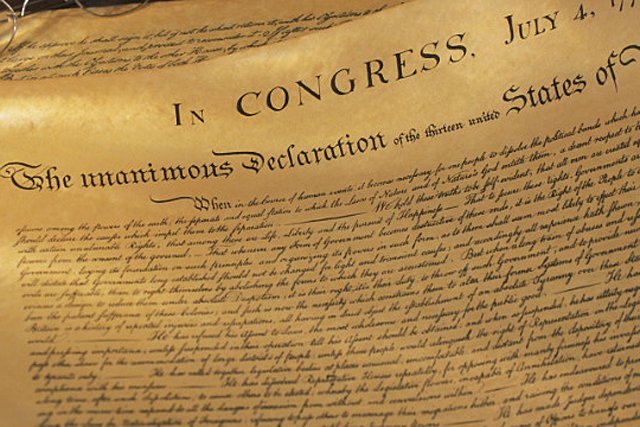
declaration-of-independence-1

Slavery officially ended, at least on the books in America, in 1863. The 19th Amendment finally ended decades of struggling, allowing women the right to vote. Now, in 2015, gays received a federal blessing with the removal of restrictions on same-sex marriage. All were celebrated as victories for the activists trying to push these agendas toward mainstream acceptance. The question is why did they have to fight for them in the first place?

Rights come in two varieties: natural and legal. Jefferson’s preamble to the Declaration of Independence creates the platform by which the United States would assert their liberation from the tyranny of Great Britain by saying that we are all born with natural rights – life, liberty and the pursuit of happiness. Legal rights are those created under social contract theory – the fundamental balance between what rights people surrender in return for the benefits of a larger and orderly society.

Therein lies the problem.

Take a survey of all our systems of law: common law, civil law, criminal law, corporate law, real estate law, biblical law, maritime law, tax law, Hammurabi’s code, you might even consider the Ten Commandments. Over the last six thousand years, we’ve been so busy legislating what people can and can’t do that we’ve lost sight of what simple, natural rights look like. At best, we have some semblance of civilization (not really – just read the news every day). At worst, we have global disparity and the polarization of people over every belief, custom, and way of life.

It comes down to agendas. Get enough people together with a similar agenda and the life of a natural right is threatened. It’s the might-makes-right sickness. News flash: the majority IS NOT always right. There should never have been a law restricting same-sex marriage. If two people find a connection with another of the same-sex, how can anyone honestly object? Why should anyone care if two women kiss, or two men hold hands? It’s a natural right. Why don’t women receive equal pay? It’s a natural right. Instead of voting for new laws, we should be looking more toward removing statutes, especially the ones that offer benefits to smaller segments of society to the deficit of everyone else. (IRS, are you listening?) We should be re-examining the ways in which our society is suppressing our natural rights.

My fifteen-year-old son, Ian, phrased it correctly for me. He said: “how embarrassing humans are to have just allowed gay marriage, instead of how it should’ve been a human right from the beginning.”  So today, on this July 4th, I can rest thinking that perhaps there is some hope for the future after all.