
(A video version of this post can be found at: https://www.instagram.com/p/DcY46DDuxQ8/

Have you ever considered how it seems that every election is steered by the amount of money a campaign grosses in order to make a candidate competitive in a race?
To be truthful, I have made contributions to some candidates and political causes – $546 since 2015 to be exact – not a lot, but some. I suppose those tiny donations were, in some way, my attempt to allay the fear that the opposing candidate would somehow make things worse for us if he or she won and that my support might help prevent that from happening. And this is just what I…as an individual…have contributed. There are hundreds of thousands, well…probably millions of other people like me making similar donations.
Then there is the big money – Super PACs, corporations, non-profits, labor unions who all invest vast sums virtually trying to buy whatever political clout they can to support their own objectives and thanks to the 2010 Citizens United versus the Federal Election Commission ruling by the Supreme Court, they’ve been allowed to invest unlimited amounts of money in political advertising. Is it any wonder the rich get richer? They have the resources to extend their influence to buy whatever they like by funneling money, often surreptitiously into the Super PACs.
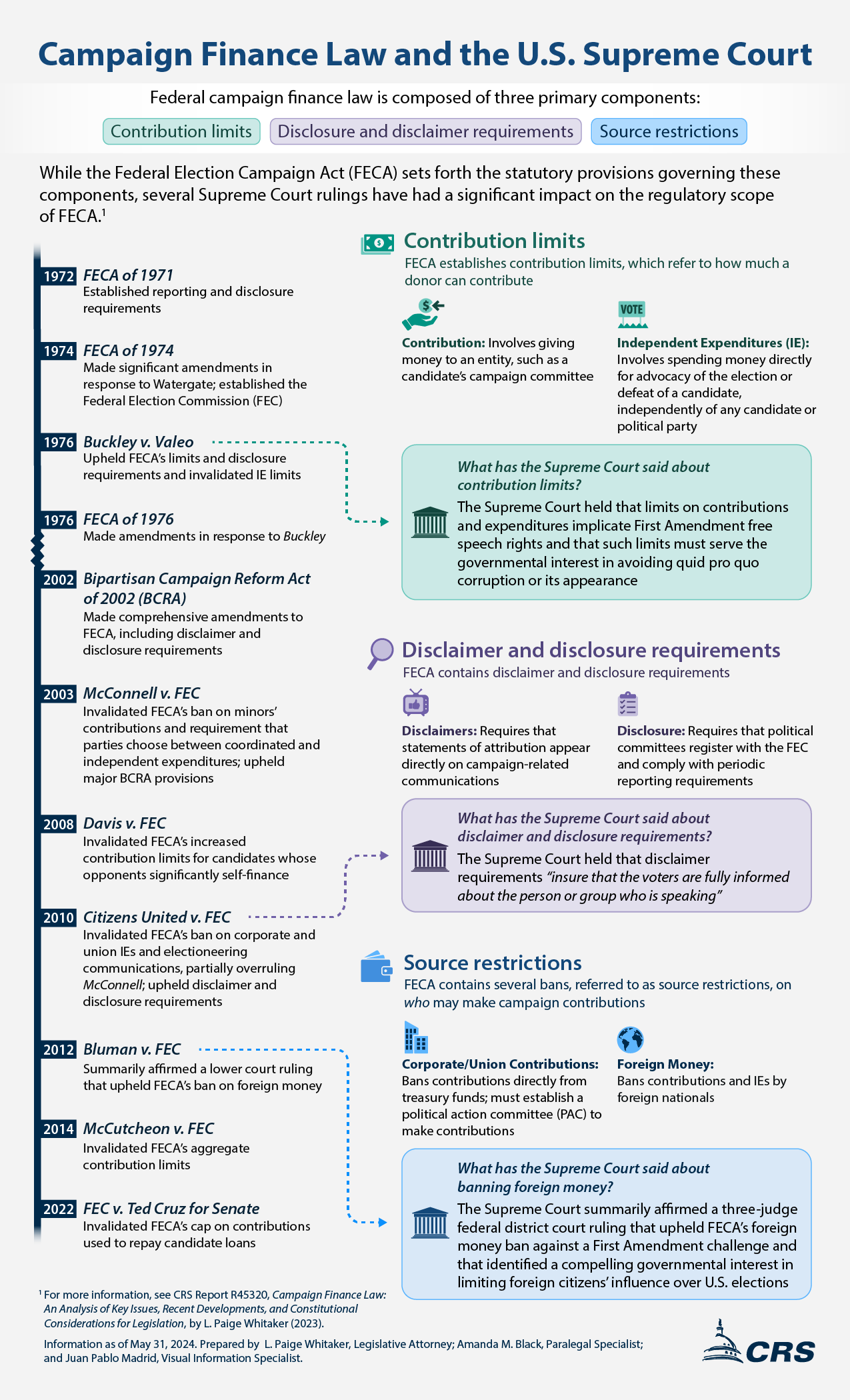
But should this really be the way elections are decided? Should it be about how much money is raised and spent on a campaign? Is it fair to allow the wealthy to have that much leverage in seeking what they want? Oh HELL no. But all this isn’t new. Complaints against Citizens United go back quite a ways.
Think about the aggregated amount of money sitting around waiting to be spent on ads that denigrate an opponent. Instead of a candidate or their supporting Super PAC telling us what they propose, what they stand for, what they want to accomplish if elected, most ads seem to ignore that in favor of telling us how awful someone else is – often by telling half-truths, or in some cases, outright lies. We are bombarded with endless commercials often ending with the words “I approve this message”. We get endless texts and emails. We have to drive through intersections littered with posters that never seem to be removed.
Every four to six years there are campaigns: 435 U.S. house of representatives, 100 senators, a president and vice president – that’s just the Federal level; 50 state governors, roughly 7,383 state legislators – and every one of these candidates try to raise millions of dollars to fight their opponents.
And recently, June 30, 2026 in fact, the U.S. Supreme Court in a 6 to 3 ruling eliminated the Federal limits on how much money a political party can spend for presidential and congressional campaigns. Justice Bret Kavanaugh, delivering the court’s opinion stated that the 1971 Federal Election Campaign Act’s limits violate the First Amendment. He said, and I quote, “In short, Congress’s original justification for the limits on political-party coordinated expenditures is entirely inadequate under the First Amendment.” Mind you before that ruling, the FECA’s limits allowed for up to $4m on a senate campaign, $130,000 for a House candidate, and over $32M for a Presidential Candidate. The First Amendment also played a big part in the Citizens United ruling. I guess the First Amendment doesn’t come cheap.
Here’s a simple idea – how much better would it be if every candidate for every office posted their voting record, if applicable, along with their platform of what they hope to achieve on their own website. For God’s sake, who doesn’t have a website these days? Use the damn things. If the press did their job and made everyone aware of who was running for what position, then everyone would have the opportunity to read for themselves what each candidate is about and make a decision on whom to vote for. I read a posting yesterday that, in Texas, Greg Abbott’s “war chest” stands at $67.4 million. That’s one candidate for a re-election as governor.
So, let’s use round numbers. Let’s say in that in every four to six year period there are 10,000 campaigns and each campaign spends $2,000, even $3,000 for a well-constructed, comprehensive candidate website – that’s $20 or $30 million in total, less than half of one candidates war chest. There are billions of dollars out there trying to sway elections. Don’t you think there are better ways to spend that money? You know The Constitution, that document which governs how things should run in this country. As a reminder, it opens with “We The People”. It does not open with “We the Super PACS”.
Just one more example of American insanity.
Give me a follow by clicking the blue button at the top right under the banner…

