Election Campaign Donations – Really?

(A video version of this post can be found at: https://www.instagram.com/p/DcY46DDuxQ8/ 
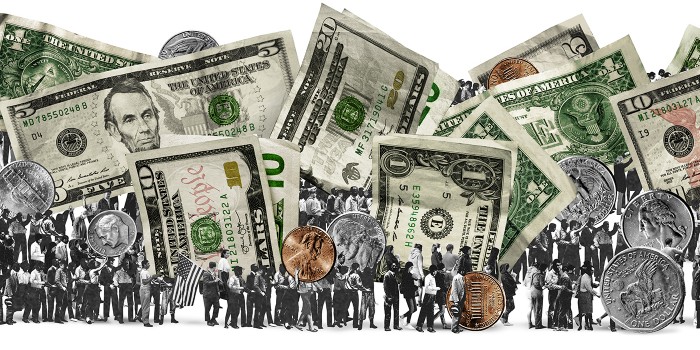
Have you ever considered how it seems that every election is steered by the amount of money a campaign grosses in order to make a candidate competitive in a race?

To be truthful, I have made contributions to some candidates and political causes – $546 since 2015 to be exact – not a lot, but some. I suppose those tiny donations were, in some way, my attempt to allay the fear that the opposing candidate would somehow make things worse for us if he or she won and that my support might help prevent that from happening. And this is just what I…as an individual…have contributed. There are hundreds of thousands, well…probably millions of other people like me making similar donations.

Then there is the big money – Super PACs, corporations, non-profits, labor unions who all invest vast sums virtually trying to buy whatever political clout they can to support their own objectives and thanks to the 2010 Citizens United versus the Federal Election Commission ruling by the Supreme Court, they’ve been allowed to invest unlimited amounts of money in political advertising. Is it any wonder the rich get richer? They have the resources to extend their influence to buy whatever they like by funneling money, often surreptitiously into the Super PACs.
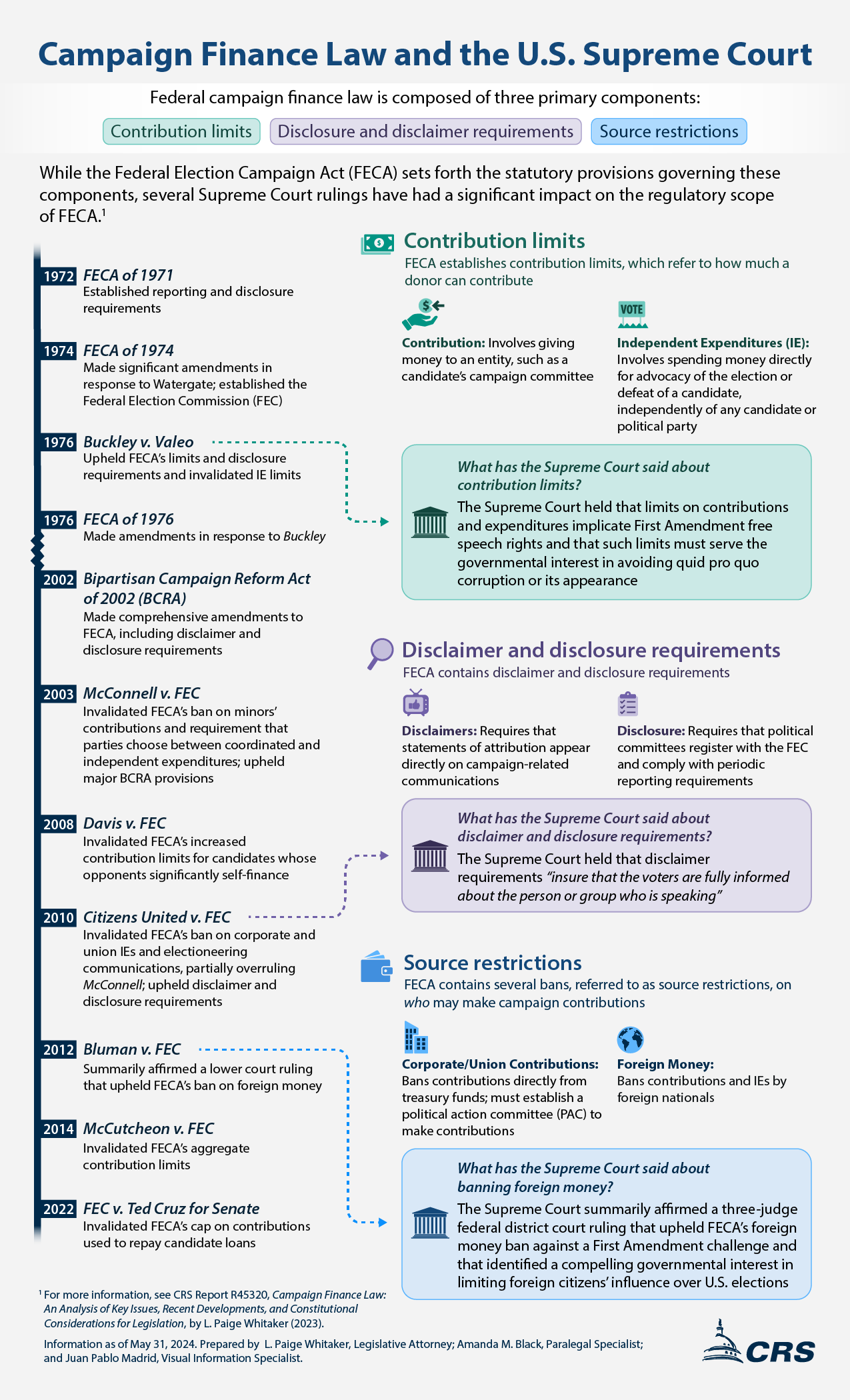
But should this really be the way elections are decided? Should it be about how much  money is raised and spent on a campaign? Is it fair to allow the wealthy to have that much leverage in seeking what they want? Oh HELL no. But all this isn’t new. Complaints against Citizens United go back quite a ways.

Think about the aggregated amount of money sitting around waiting to be spent on ads that denigrate an opponent. Instead of a candidate or their supporting Super PAC telling us what they propose, what they stand for, what they want to accomplish if elected, most ads seem to ignore that in favor of telling us how awful someone else is – often by telling half-truths, or in some cases, outright lies. We are bombarded with endless commercials often ending with the words “I approve this message”. We get endless texts and emails. We have to drive through intersections littered with posters that never seem to be removed.

Every four to six years there are campaigns: 435 U.S. house of representatives, 100 senators, a president and vice president – that’s just the Federal level; 50 state governors, roughly 7,383 state legislators – and every one of these candidates try to raise millions of dollars to fight their opponents.

And recently, June 30, 2026 in fact, the U.S. Supreme Court in a 6 to 3 ruling eliminated the Federal limits on how much money a political party can spend for presidential and congressional campaigns. Justice Bret Kavanaugh, delivering the court’s opinion stated that the 1971 Federal Election Campaign Act’s limits violate the First Amendment. He said, and I quote, “In short, Congress’s original justification for the limits on political-party coordinated expenditures is entirely inadequate under the First Amendment.” Mind you before that ruling, the FECA’s limits allowed for up to $4m on a senate campaign, $130,000 for a House candidate, and over $32M for a Presidential Candidate. The First Amendment also played a big part in the Citizens United ruling. I guess the First Amendment doesn’t come cheap.

Here’s a simple idea – how much better would it be if every candidate for every office posted their voting record, if applicable, along with their platform of what they hope to achieve on their own website. For God’s sake, who doesn’t have a website these days? Use the damn things. If the press did their job and made everyone aware of who was running for what position, then everyone would have the opportunity to read for themselves what each candidate is about and make a decision on whom to vote for. I read a posting yesterday that, in Texas, Greg Abbott’s “war chest” stands at $67.4 million. That’s one candidate for a re-election as governor.

So, let’s use round numbers. Let’s say in that in every four to six year period there are 10,000 campaigns and each campaign spends $2,000, even $3,000 for a well-constructed, comprehensive candidate website – that’s $20 or $30 million in total, less than half of one candidates war chest. There are billions of dollars out there trying to sway elections. Don’t you think there are better ways to spend that money? You know The Constitution, that document which governs how things should run in this country. As a reminder, it opens with “We The People”. It does not open with “We the Super PACS”.

Just one more example of American insanity.

Give me a follow by clicking the blue button at the top right under the banner…

Campaign Finance, a Political Cancer

I recently responded to an email regarding a political candidate. In return I received a ‘thank you’ along with a link to where I go could to make a contribution to that person’s campaign.

On some basic level, I was insulted…actually, no, I was kinda ticked off.

First of all, the people running for office are, by and large, wealthy individuals in their own right – this alone is a discordant fact. Secondly, why should I contribute to a campaign that’s virtually guaranteed to spend money on ads that ridicule the opposition instead of telling me in plain language what it is they would do if elected? Third, current laws allow virtually unlimited donations to Political Action Committees as a way round corporate and union funding caps, which is like handing out free crystal meth samples and offering mini-bottles of alcohol outside a rehab facility. Money and politics simply don’t mix – why have we not learned this by now?

Chief Justice John Roberts Jr. wrote that ‘there is no right in our democracy more basic than the right to participate in electing our political leaders.” This was his rationale behind why campaign finance limits should be all but eliminated, that in his view they violate First Amendment rights of free speech. It seems odd that a Supreme Court Judge could make the connection that money talks, and…well you know how that expression ends. Who said that an individual shouldn’t participate in an election? Why does that also have to mean that we soak our candidates in baths of liquid, free-flowing, hard-earned cash? The vast collection of news agencies could arrange their messages for free in the interest of democratic selection.

In the early years of the 20th Century, responsible laws were passed to help limit undue influence by the wealthy and those who lobbied for special interests, how much could be spent on campaigns, and allow for campaign finance transparency. In 1971, Congress consolidated these laws in the Federal Election Campaign Act (FECA). At the same time, there was a move to have campaigns financed by the government, as the alternative – it’s why you still see questions on your tax return about donating a dollar. Three years later, this was amended with additional spending limits and created the Federal Election Commission (FEC).

In 1975, the conservative Senator from New York, James Buckley, filed suit that the provisions of the FEC violated First Amendment rights to free speech and the due process considerations of the Fifth Amendment. As a result, the Supreme Court struck down limits on expenditures by candidates toward their own elections (which seems to freely offer an advantage to a wealthy individual running for office). It was the first step in the wrong direction.

Fast forward to 2009.

Citizens United – an organization with about as much common sense as The Tea Party – fought the Federal Election Commission over the decades old statutes that were put in place to safeguard against government corruption. This came about because they wanted to show a film called Hillary: The Movie during a time-frame that was prohibited under the old laws (within 60 days of a general election or 30 days of a primary). At stake were provisions covered under the First Amendment and political expenditures by non-profit corporations and their ability to contribute indirectly to campaigns – such as through the production of films.

There was considerable debate over this and the ruling came down in a close 5-4 vote. Justice Kennedy, in writing his majority opinion, took two wrong turns. The first was in the distinction that spending money is a variable of free speech; the second was that corporations, as an “association of individuals” should be afforded the same protections under the First Amendment. What the Judge failed to consider is that any time money is involved, those with more of it can artificially sway voters and second, that decisions corporations make about where to spend its money is governed by a small few at the top and not necessarily at the express wishes of the “association of individuals” as a whole. Further, corporations continue under the theory of a going concern, can therefore exist perpetually, tap into the accumulated wealth of years or even decades, and then those top decision makers can bring the resources under their control to bear in unduly influencing voters as they see fit. An individual whose voice ultimately dies with their passing and might not be able to summon such financial resources is therefore placed at an unfair disadvantage. The notion that preventing independent spending by corporations and unions as being a violation of the First Amendment has been twisted by those who attempt to sway public opinion to their own ends and agendas  – and profits.

Justice Stevens, in writing his dissent to these rulings, mentioned that the “We the People” principal should not extend to corporations which exist for profit. The favorable ruling “threatens to undermine the integrity of elected institutions across the Nation” and will contribute to the “appearance of corruption”. He had a point. Ask anyone on the street if they think the government is corrupt. The New York Times reported that the number of Americans convinced about corruption grew from 59% to 79% between 2006 and 2013. Stevens concluded his dissent by saying: “the Court’s opinion is thus a rejection of the common sense of the American people” and “While American democracy is imperfect, few outside the majority of this Court would have thought its flaws included a dearth of corporate money in politics.”

The most recent evidence of decay came just last April in yet another 5-4 Supreme Court decision. Justice Stephen G. Breyer said in his dissent that “If the court in Citizens United opened a door, today’s decision may well open a floodgate.” He was referring to the fact that individuals still have the $2,600 per candidate limit in primary and general elections, but they are now able to contribute $48,600 every two years to all federal candidates, and political action committees as much as $74,600. In essence, it presents the opportunity for “a single individual to contribute millions of dollars to a political party or to a candidate’s campaign.”

As a voter beginning to consider the next presidential election in 2016, it’s hard to imagine how these rulings have not and do not contribute to, if not exacerbate, the sharp divide between the parties, or the country as a whole. How much online rhetoric do we read that is devoted to the fact that the 1% controls the country and has driven an even greater wedge in its separation from the other 99%? Campaign finance has infected the election process with the internal appearance of a smoker’s blackened lungs.

If the person who wants to become the leader of the free world cannot figure a way to get there with nothing more than the goodwill of the people and without the vast amount of handouts from PACs, unions, and wealthy business people, does that person really deserve to be there in the first place? They’re certainly going to do it without my nickels.